Selected projects
Five product design cases and one open-source tool. Ordered by process depth and measurable impact, not recency.
I show less work done well rather than more work done quickly.
Selected projects
Five product design cases and one open-source tool. Ordered by process depth and measurable impact, not recency.
I show less work done well rather than more work done quickly.
Onboarding from 30% to 75%+
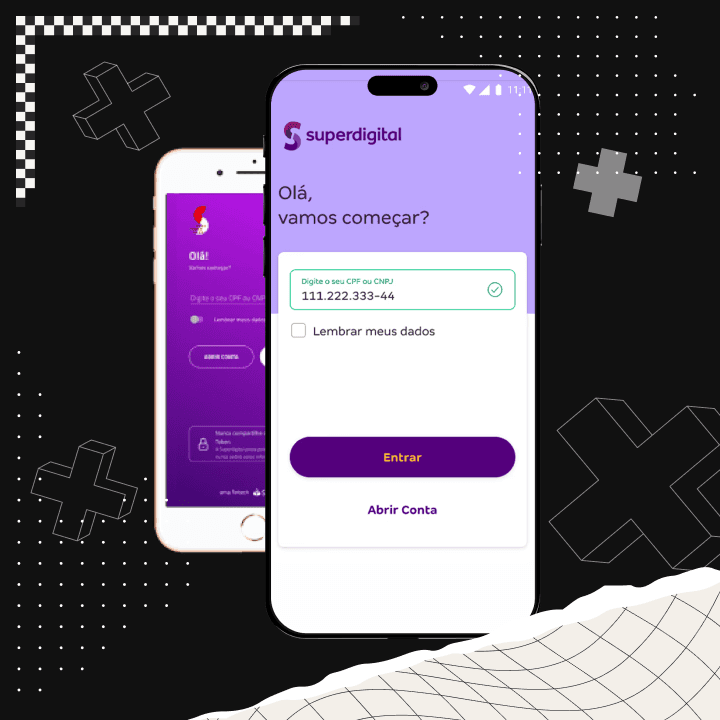
A 15-screen account-opening flow with a 30% completion rate, 86% card waste, and an app store going in the wrong direction. I led the redesign under a hard launch deadline, navigating real backend constraints and a C/D demographic that needed a flow built for how they actually use phones, not how the system needed to collect data.

Five AI skills I built because generic feedback was making my work worse
I got tired of AI feedback that sounded right but wasn't grounded in anything, so I built five skills for Claude that fix that. Each one covers a different stage of design work (auditing, critique, strategic design, discovery, and frontend spec) and every output labels what's data, what's estimated, and what's an inference. All five are open source on GitHub.
Three fragmented login systems. One unified authentication layer
A client with three separate websites and three fragmented login systems needed a unified identity layer: LGPD and GDPR compliant, SSO across all properties, integrated with VTEX. The design challenge was making enterprise-grade IAM infrastructure feel like a consumer product.

Designing for a demographic that had never been asked what they wanted
Research-led strategy for a youth fintech redesign: 12 interviews with 15 to 21 year-olds, 8 guardian conversations, a co-creation workshop with 6 participants, and competitive analysis across 5 apps. This was a strategic exploration project. The work produced a design direction and roadmap, not a shipped product.

Making a payment gateway migration invisible to the customer
Checkout redesign for an Australian paint retailer migrating payment infrastructure to Windcave. The job was to make a technically-driven migration feel invisible to the customer: same brand, less friction, no trust signals lost at the moment people actually hand over their card details.
Onboarding from 30% to 75%+
A 15-screen account-opening flow with a 30% completion rate, 86% card waste, and an app store going in the wrong direction. I led the redesign under a hard launch deadline, navigating real backend constraints and a C/D demographic that needed a flow built for how they actually use phones, not how the system needed to collect data.
Five AI skills I built because generic feedback was making my work worse
I got tired of AI feedback that sounded right but wasn't grounded in anything, so I built five skills for Claude that fix that. Each one covers a different stage of design work (auditing, critique, strategic design, discovery, and frontend spec) and every output labels what's data, what's estimated, and what's an inference. All five are open source on GitHub.
Three fragmented login systems. One unified authentication layer
A client with three separate websites and three fragmented login systems needed a unified identity layer: LGPD and GDPR compliant, SSO across all properties, integrated with VTEX. The design challenge was making enterprise-grade IAM infrastructure feel like a consumer product.
Designing for a demographic that had never been asked what they wanted
Research-led strategy for a youth fintech redesign: 12 interviews with 15 to 21 year-olds, 8 guardian conversations, a co-creation workshop with 6 participants, and competitive analysis across 5 apps. This was a strategic exploration project. The work produced a design direction and roadmap, not a shipped product.
Making a payment gateway migration invisible to the customer
Checkout redesign for an Australian paint retailer migrating payment infrastructure to Windcave. The job was to make a technically-driven migration feel invisible to the customer: same brand, less friction, no trust signals lost at the moment people actually hand over their card details.